


A box truck request comes down to four things: an Inc. or an LLC with at least two years of operating history, recent business bank statements that show steady deposits, a specific truck with its VIN and GVWR, and a clear picture of the work the truck will do. Funding partners read a delivery or route operation differently from a long-haul tractor, so how the business earns matters as much as the truck.
None of the four is a secret. The box truck financing page covers the product; this is the file behind it, written for the owner adding a second or third truck.
The business
The baseline for equipment financing is an Inc. or an LLC with at least two years of operating history. Lenders want a real entity with a filing history, and for a small fleet they also want the name on the application, the EIN paperwork, the bank statements and the invoice to line up.
- Legal entity name exactly as registered, plus the EIN
- MC / DOT number, if you run under your own authority
- How long the entity has actually been operating
If the business is newer than that, or not incorporated, and it invoices for freight, freight factoring is worth a look: approval leans on who owes you, not on how long you have been running.
One habit that pays off on any equipment request: keep the business’s money in the business’s account. Statements that mix personal and business deposits are harder to read, and a lender reading them has to guess which is which.
The cash flow: what the bank statements show
Route and contract work shows up as regular deposits, and that is what lenders read in the last three months of business bank statements. They look for rhythm: deposits that arrive on a pattern, balances that survive a slow week, and payments already pulling from the account.
You do not need existing delivery contracts to apply. They are not a requirement; contracted route work simply shows up clearly in the statements. What does help is an explanation ready for anything unusual — a missing month, a large one-off deposit, a returned payment — before somebody has to ask for it.
The truck: what goes into the file
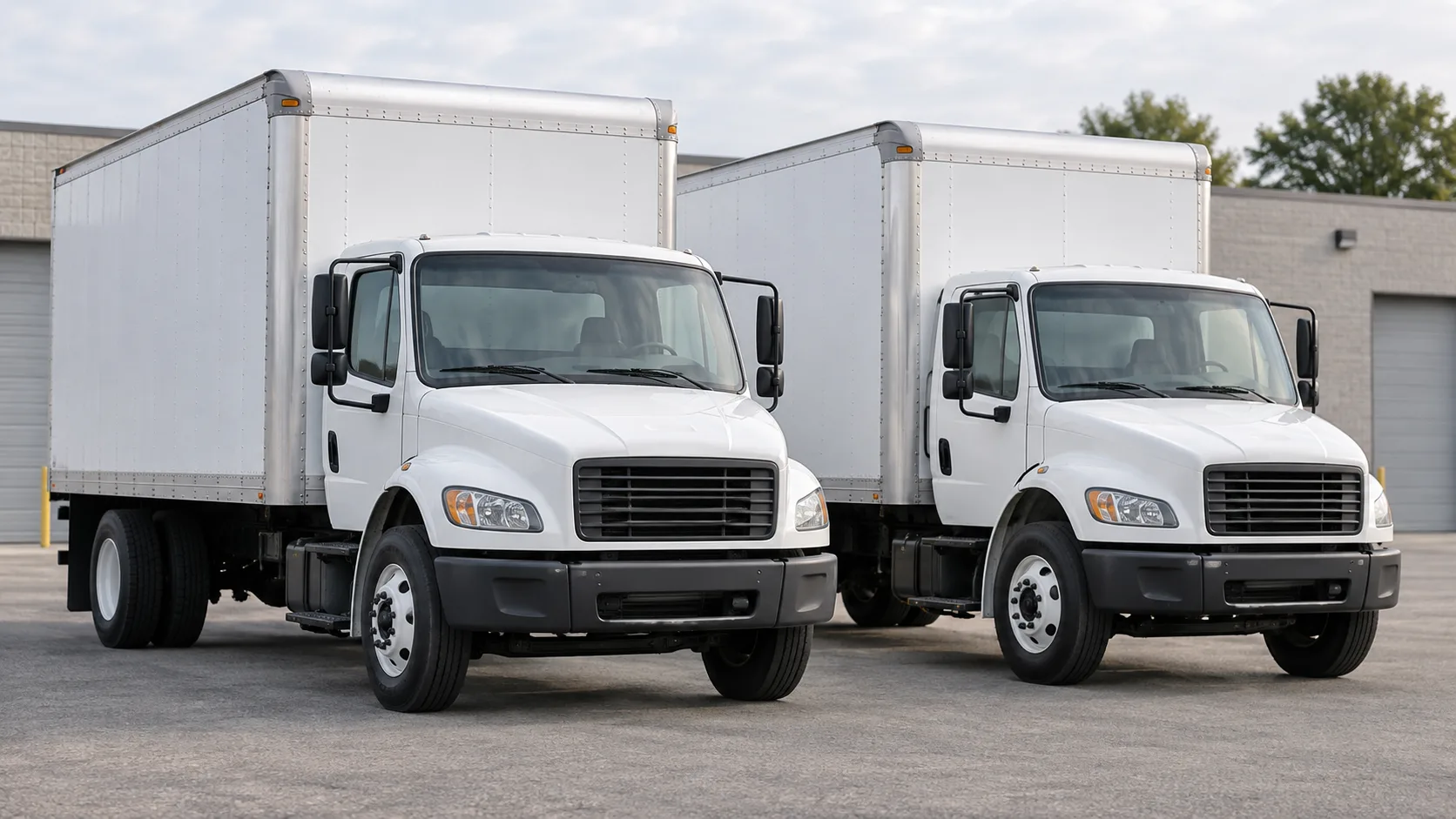
The truck is the collateral, so its details go in the file. Straight trucks from 16 to 26 feet are the range this product covers, including refrigerated boxes and trucks fitted with a liftgate; larger equipment moves into a different class of truck. For the truck you are looking at, the file needs:
- VIN, model year and mileage
- Body length and GVWR
- The dealer invoice or bill of sale
- Photos, including the inside of the box
- Liftgate or refrigeration unit details, if the truck has them
A refrigerated box is reviewed together with its refrigeration unit, so have the unit’s make, hours and service history ready with the VIN. If a liftgate or other equipment was added, note it in the request.
Funding partners also want to know how the truck earns, so say so plainly: local courier routes, appliance or furniture delivery, moving jobs, a dedicated contract, a service fleet that carries tools and stock. A first box truck and the next one in an established small fleet are different stories, and both fit the product.
The CDL question
A commercial driver license becomes necessary at 26,001 lbs GVWR, and 26 ft box trucks are commonly built just under that line. Check the GVWR on the door sticker of the specific truck.
For a small fleet that is more than trivia, because it decides who on your team can drive the truck. Confirm the GVWR of the exact unit before you commit to it, rather than assuming from the length of the body.
Adding to a small fleet
Once the business already owns trucks, they are part of the file. Lenders see the payments on existing vehicles on the bank statements whether or not they appear on the application, so list your existing obligations up front. Listed, they read as organized; discovered, they read as a surprise.
One request can cover one truck or several, which helps when you are replacing or adding more than one at a time. Each truck still brings its own VIN, invoice and photos.
When you are replacing a truck rather than adding one, say so, and say what happens to the old unit. A truck leaving the fleet changes the payments and the deposits on the statements, and a short explanation up front saves a question later.
New or used, dealer or private seller
A used box truck is an ordinary purchase. The model year, the mileage and the condition shape which funding partners respond, and used truck financing goes into how. Buying from another owner adds the title, lien and payoff steps, and the checklist for them is in what documents you need to buy a truck from a private seller.
Photos and service records matter more as a truck gets older, so ask the seller for them before you agree on a price, not after.
Rates, terms and the down payment
Rates on equipment financing run from 8% to 13% based on qualifications, with terms from 36 to 72 months, set by the funding partner after it reviews the truck and the business. The down payment comes back with the rest of the structure, so a fixed percentage quoted before that review is a guess.
Before you apply
- The entity name, EIN and, if relevant, the MC / DOT number in one place
- Three months of business bank statements, downloaded as PDFs
- The truck’s VIN, GVWR and body length, plus an itemized invoice
- A sentence or two on what the truck will do
Decisions typically come back within 24 hours of a complete application, and funding typically follows within 2–5 business days. Most of what slows a request is on that list; the documents lenders actually want to see covers the rest.
Ready to look at a truck? See the box truck page or check your options — one application to 40+ lender partners, soft credit pull only, no obligation.